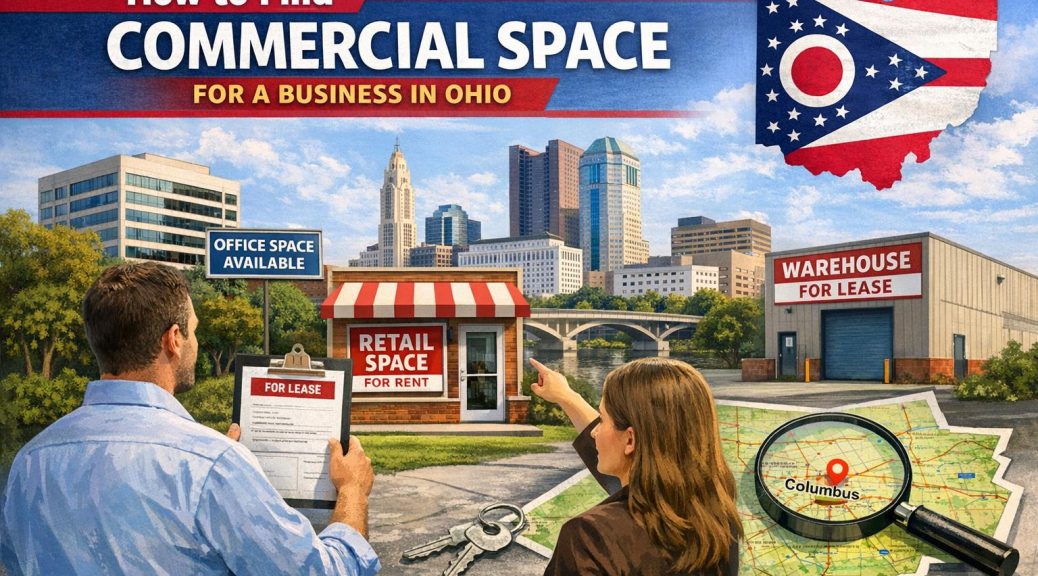
How to Find Commercial Space for a Business in Ohio
Understanding Your Business Needs
Before beginning the search for commercial space in Ohio, it is essential to define your business requirements with precision. A well-structured assessment of your operational, financial, and strategic needs will reduce uncertainty and help you focus only on properties that align with your objectives. Without this groundwork, it is easy to waste time evaluating locations that do not support long-term growth.
Start by examining the nature of your business activities. Retail stores, medical offices, logistics companies, manufacturers, and professional service firms each require different types of spaces. A retail establishment may depend heavily on foot traffic and visual accessibility, while a warehouse operation may prioritize loading docks, ceiling height, and access to major highways. Office-based businesses may require flexible layouts, conference rooms, and parking accommodations for employees and clients.
Business Size and Scale: Determining the amount of space required is a fundamental step. Evaluate your current staffing levels, projected hiring plans, inventory storage requirements, and specialized equipment needs. Consider not only your immediate requirements but also anticipated growth over the next three to five years. Securing a space that is too small can result in operational disruption, while leasing excessive square footage may strain financial resources. It is often helpful to create a detailed floor plan outlining workstations, storage areas, customer reception spaces, and utility areas to estimate square footage more accurately.
Location Preferences: Location plays a critical role in commercial success. In Ohio, businesses must consider proximity to population centers, transportation infrastructure, supplier networks, and competitors. For customer-facing businesses, visibility from main roads and accessibility to parking are major considerations. For industrial or distribution businesses, access to interstate highways, rail lines, or airports such as those in Columbus and Cleveland may significantly influence operational efficiency. In addition, evaluating commute times for employees can support recruitment and retention strategies.
Budget Constraints: Establishing a comprehensive budget is necessary before entering lease negotiations. Beyond base rent, factor in property taxes (if not included in the lease), common area maintenance fees, utilities, insurance, security deposits, renovation costs, and technology infrastructure installation. Businesses should also evaluate whether the lease structure is gross, net, or triple net, as each format assigns different financial responsibilities to the tenant. Preparing a financial forecast that includes occupancy costs as a percentage of projected revenue can clarify affordability and prevent financial strain.
Researching the Ohio Commercial Real Estate Market
After defining internal requirements, the next step is to understand the broader commercial real estate environment within Ohio. Market conditions vary across regions and cities. Columbus, for example, has experienced sustained growth in technology and logistics sectors, while Cleveland has a diversified economy with strengths in healthcare and manufacturing. Cincinnati serves as a commercial hub with strong corporate and distribution activity.
Analyzing vacancy rates, average rental prices per square foot, and development trends helps determine whether the market favors landlords or tenants. In a tenant-friendly market with higher vacancy rates, businesses often have greater leverage to negotiate rent concessions or incentives. Conversely, in high-demand areas with limited supply, landlords may maintain stricter lease terms.
Online real estate databases, brokerage reports, and local economic development agencies provide valuable data. Commercial platforms allow users to filter properties by square footage, price range, property type, and geographic area. Reviewing historical data on rental rate trends can also offer insight into how stable or volatile a particular submarket may be.
Demographic and economic indicators are equally significant. Population growth, employment rates, median household income, and infrastructure investments influence long-term property values and business sustainability. For instance, areas undergoing redevelopment or urban revitalization may present opportunities for early entry at competitive rates.
Engaging with Real Estate Agents
While independent research is valuable, engaging a commercial real estate agent with expertise in Ohio markets can streamline the process. Commercial transactions involve complex negotiations, financial analysis, and regulatory considerations that differ substantially from residential real estate deals.
A qualified agent provides access to market intelligence, including properties not publicly advertised. Many commercial listings circulate within professional networks before appearing online. Agents also interpret lease terminology, compare pricing structures across regions, and help assess whether quoted rates are aligned with market standards.
Furthermore, experienced agents understand local market cycles and development plans. They may be aware of upcoming infrastructure projects, zoning updates, or planned commercial developments that could influence property value and business potential. Their insights can prevent costly miscalculations.
Benefits of Professional Assistance
Professional assistance extends beyond property searches. Real estate brokers often coordinate property tours, communicate with landlords, and structure offers that reflect favorable terms. They can negotiate tenant improvement allowances, free rent periods, renewal options, or expansion rights.
In addition, agents collaborate with attorneys, inspectors, and financial advisors to ensure that transactions comply with legal and financial standards. Commercial leases often contain clauses regarding maintenance responsibilities, operating expenses, and escalation provisions. Misunderstanding these elements can result in unexpected financial obligations. With professional guidance, business owners reduce risk and gain clarity throughout the process.
Evaluating Properties
Once a shortlist of potential properties has been established, systematic evaluation becomes essential. Physical inspection should extend beyond surface appearance and include structural integrity, utility systems, accessibility, and compliance standards.
Begin with a comprehensive walkthrough of the property. Assess the condition of roofing, flooring, plumbing, electrical wiring, heating, ventilation, and air conditioning systems. In older buildings, verify whether wiring can support technological demands, especially for businesses reliant on high-speed data networks. Confirm that the building meets accessibility requirements as mandated by federal and state laws.
Consider layout functionality. Open floor plans may offer flexibility, while subdivided spaces may limit reconfiguration without renovation. Evaluate whether walls can be modified and whether structural elements restrict floor design. For retail properties, storefront visibility, display windows, and signage opportunities influence brand exposure.
Neighborhood Analysis: Beyond the building itself, analyze the surrounding environment. Study traffic patterns at different times of day, pedestrian flow, and nearby businesses. The presence of complementary businesses can increase customer traffic, whereas excessive direct competition may dilute market share. Crime statistics, municipal services, and infrastructure maintenance also contribute to the suitability of a location.
Understanding the local economic climate is particularly important in Ohio, where economic conditions can differ across counties. County development agencies and chambers of commerce provide information regarding employment rates, new business openings, and investment incentives.
Building Condition: Professional inspections are often advisable before finalizing lease agreements. Structural engineers, electricians, and environmental consultants can identify hidden issues such as water damage, asbestos, mold, or outdated fire suppression systems. For industrial spaces, verify loading capacities, ceiling heights, and compliance with safety regulations. Identifying deficiencies early allows negotiation of repair responsibilities or rent adjustments.
Navigating Zoning Laws and Regulations
Zoning compliance is a critical component of commercial leasing in Ohio. Municipal zoning ordinances dictate permissible land uses and operational parameters within specific districts. Establishing a business in an area not zoned for its operations can lead to fines, forced closure, or legal disputes.
Before committing to a property, verify that your intended business activity aligns with the zoning classification. For instance, manufacturing operations may not be permitted in commercial retail districts. Restaurants may need special approvals related to health codes and alcohol sales. Warehousing activities may face restrictions regarding truck traffic or hours of operation.
In addition to zoning classifications, review building codes, signage restrictions, and parking requirements. Some municipalities impose minimum parking ratios based on square footage or occupancy levels. Failure to meet these requirements may result in delayed openings or required modifications.
Consulting local planning departments or land-use attorneys can clarify regulatory obligations. Some businesses may apply for conditional use permits or variances if a property does not perfectly align with existing zoning categories. However, these processes require time, documentation, and possible public hearings, which should be integrated into the project timeline.
Lease Agreements
Examining the lease agreement in detail is one of the most significant steps in securing commercial space. Commercial leases in Ohio vary in structure and allocation of responsibilities. Unlike residential leases, commercial lease terms are often negotiable and may extend for multiple years.
Common lease structures include gross leases, where the landlord covers most operating expenses; net leases, where tenants pay rent plus a portion of taxes and maintenance; and triple net leases, where tenants assume responsibility for taxes, insurance, and maintenance expenses. Understanding which model applies helps calculate true occupancy costs.
Pay attention to escalation clauses that increase rent annually or periodically. Escalations may be fixed percentages or tied to inflation indices. Review renewal options, termination clauses, and assignment or subleasing rights. Businesses anticipating growth should consider expansion rights allowing them to lease adjacent space if it becomes available.
Repair and maintenance responsibilities must be clearly defined. Determine who is responsible for structural repairs, HVAC systems, and common area maintenance. Negotiate tenant improvement allowances if renovations are necessary before occupancy.
Seeking legal review before signing a lease is advisable. An attorney experienced in Ohio commercial real estate law can interpret complex clauses and protect your interests.
Finalizing the Decision
After completing market research, property evaluation, and lease negotiations, the decision-making phase involves confirming financial feasibility and operational readiness. Perform a final cost analysis, incorporating negotiated rent, build-out expenses, moving costs, and ongoing operational expenses.
Ensure that timelines for renovations, inspections, and occupancy align with business launch schedules. Discuss contingencies for delays in construction or permit approvals. Confirm that certificates of occupancy and required business licenses can be obtained without complications.
Documentation should be carefully reviewed before signing. Maintain copies of the lease agreement, inspection reports, amendment addenda, and written commitments regarding improvements or concessions. Clear documentation prevents misunderstanding and establishes accountability.
Preparing for Move-In
Transitioning into a new commercial space requires organized planning. Begin by scheduling any necessary renovations or tenant improvements. Coordinate contractors, designers, and technology providers to ensure infrastructure is installed correctly.
Utilities such as electricity, water, gas, internet, and security services must be activated before operational launch. Businesses should also update official addresses with state agencies, financial institutions, suppliers, and customers.
Compliance inspections may be required before opening. Health departments, fire departments, or building officials may conduct safety inspections depending on the nature of your operations. Ensuring code compliance prevents delays and penalties.
Employee communication is important during relocation. Provide updated maps, parking instructions, and revised operational procedures if necessary. Establishing a clear timeline reduces confusion and supports continuity.
Finally, consider signage installation and branding elements. Exterior signage must comply with municipal regulations and often requires permits. Interior layouts should support workflow efficiency and customer experience objectives.
In conclusion, securing commercial space in Ohio involves deliberate planning, detailed research, legal awareness, and structured evaluation. By understanding business requirements, studying market conditions, carefully reviewing lease terms, and preparing thoroughly for occupancy, businesses can select locations that support operational stability and sustainable growth. Careful attention to each phase of the process reduces risk and positions the enterprise for effective integration within Ohio’s diverse commercial landscape.